Showing posts with label Bicycle Touring. Show all posts

Thursday, June 17, 2010

New Stuff!


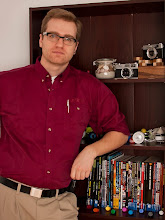
So today my girlfriend Alanna and I received a package from Mountain Equipment Co-op (MEC). They are a really great company, and a true co-op. They have tons of outdoors equipment and clothing. Above I am pictured wearing my new Castelli cycling cap, MEC Beech short sleeved shirt (in a basil), MEC Quarter Knickers for cyclists, and MEC liner shorts (not pictured of course).

The shirt is very light and made of 100% nylon. It has a hidden vent in the back, as well as in the front, and two front pockets. The Kickers are also very light being 88% polyester and 12% spandex with a durable water repellency finish. These two pieces of clothing were purchased mainly for touring. I want no cotton with me when I tour, or at least very little, so that laundry (or if I get wet) will dry quickly. The choice of collared shirt and knickers also have the added bonus of being kind of dressy casual so I can not feel funny going into a restaurant or attending some sort of function while on the road. I intend to acquire more polyester/nylon clothing in the coming months. The liner shorts are much thinner than normal shorts (more like boxer briefs) yet they have a very thin chamois and rubber leg grips. Great for commuting.

The hat is mostly just because I wanted one, but it did not get uncomfortable on a 17 degree Celsius ride and kept the sun out of my eyes.


I don't do a whole lot of riding in the dark, by the time I'm finished my 36-45km commute for the day I'm usually ready to relax. But last fall I did quite a bit of riding in the dark due to the early sunset and I suspect that as the nights get hotter the streets will seem more appealing at night. So I upgraded my lighting system from a MEC 1 watt shark front light and a wal-mart red flasher on the back, to a Planet Bike pair: the 2 Watt Blaze in the front and a Superflash in the rear, supposedly the "Brightest, most visible tail light on the planet." A lot of people use PB lights and they have a really neat feature on their site for checking actual light power! Haven't tried these yet but they seem really bright! Will do a review once I get out in the dark. I also have a DIY mount planned to attach this to the mount on the back of the Surly Nice Rack, but we'll get back to that when I actually make it.


Also got some camping gear. This is the GSI Pinnacle Dualist cookset (for me and the misses). It's a 1.8L pot with strainer lid, 2 bowls, 2 insulated cups, 2 sporks, and a stuff sack that doubles as a sink. It is also able to store a small fuel container and a pocket stove such as the Pocket Rocket (a very popular camp stove). We have a bigger stove, the MSR Dragonfly, which is multi-fuel and has the ability to simmer, but I may get a small stove for weekend trips.


And last but not least my Petzl Tikka Plus 2 Headlamp. Another really bright light! When we went on our bike trip last summer there were a couple of occasions where I had to shag around in the dark for something. Having to hold a flashlight and fix a tarp to prevent getting a wet tent in the middle of the pouring rain and pitch dark night is harder when you have to hold a flashlight. So I got this. It has 2 brightness settings, a flash setting, and a little red light also with a flash setting. I also have a adapter kit for this ordered to give me more mounting options, like a helmet mount.

That's it for now!
Alanna found a 6 week position for the summer, so we should be able to go on our bike vacation in mid August. I do have a bunch of stuff already collected for touring this summer as well as the big trip next year. Perhaps in the coming week's I'll have to document them and give my initial impressions and then do proper reviews after the vacation. Either way I'll probably take some pictures of it all and post it, if only to play with my Nikon D50 (btw all pics here taken with AF Nikkor 50mm 1:1.8 D).

Still on the buy list
-Western Mountaineering Summerlite 0deg Down Bag
-Silk bag liner
-Smartphone (iPhone4 or HTC Legend? What do you guys think?)
-Arkel Handlebar bag (big one)
-Arkel Front Panniers (T-28's or a pair of GT-18's not sure yet)
-A Jersey
-More camping/cycling/travel clothes

2 posts in 2 days! I'm sure I should be doing other things!

Monday, September 14, 2009

Road Bikes and You!

One of the issues with almost any sport or hobby is the intimidation of starting it. Not knowing the lingo, where to shop, what kind of gear is right for you, or the price range. That last one is the kicker. For most people as they were growing up a bicycle was something mom or dad picked up from Canadian Tire or Zellers for a hundred or a hundred and fifty bucks. The problem with bicycles is, now automatically people have an idea in their heads of how much a "good" bike costs. Unfortunately they are wrong, as I was (I always found those department store bikes would really feel like crap to ride after a month or so, even though I was only doing very light riding anyway). I was a little more prepared as my friend and roommate had already punctured the quality bicycle market. So forget what you know about bike prices and quality and we'll continue.

First we'll kind of set a bar. If you want a bicycle of any decent quality that will be worth putting riding time on and fixing and upgrading as the years and kilometers go by, get ready to spend $500. Minimum. But if you are considering buying a bike to put some serious riding time on then first thing is first: What kind of bike is right for you?

DISCLAIMER: If you're looking to do dirt/jump/downhill riding, look elsewhere as I have no idea. My small amount of knowledge and experience is strictly road bike oriented.

There are a couple of options available for different types of road riding which I'll classify as
1) Basic Road

2) Hybrid


3) Racing

4) Touring


Basic Road Bikes are...well...basic. All road bikes come with drop handle bars (up until recent years, as we'll see in the hybrid section), this can be a turn off for someone coming in new to the sport/hobby. But if you wish dive in head first, you'll get used to them in no time. What I call a basic road bike would be something like the Defy series from Giant. It has a race inspired geometry (that's what the catalog says anyway) comes with 700cx25 tires. For the newbies 700c is the diameter of the tire and the x25 means they are 25mm wide so most road bikes will come with tires between 22 or 30mm. Its a pretty basic bike with lower end of the spectrum quality gear (but still quality). But it has a frame made by a reputable company and things like shifters built into the brake levers. It also has mounts for a rear rack. So this bike could be used for a cheap starter bike to get you into racing, or put a rack on the back and carry fairly light loads as a commuter bike, or take it out for evening rides with a group. An entry level quality generic road bike like this will set you back around $900. Even though the drive train (crank, derailleurs, cassette) might be lower quality, the drop bars and lever/shifter setup cranks up the price a little. Price you pay for wanting a more road feel. But for city riding having drop bars can be a disadvantage when you look up going 30km/hr and there is a Chevy Tahoe 2 feet in front of you... this brings us to our next style of bike.

Hybrid Bicycles also known as city bikes, commuters, cross bikes, fitness bikes, have become pretty popular for their speediness of a road bike but having the upright comfortable feeling of a mountain bike. Hybrids have road components such as their cranks, wheels, derailleurs, but have a more mountain bike style of linear pull brakes and a flat handle bar. The flat bar and short wheel base really lets you zip around in traffic while giving you a good heads up of whats coming up ahead without having to change your riding position. The linear pull brakes also give you a bit more braking power than cantilever brakes seen on most road bikes. This type of bike is great for someone who is looking to start road riding without having the intimidation of dropped handlebars. These bikes often come with mount points for rear racks and as well front racks (but not always). Also usually have mount points for full coverage fenders to protect 365 day commuters from the elements on the road. These bikes are great for commuting and day trips as well, but don't expect them to carry heavy loads for multi day trips as the frames are not beefy enough to carry the weight. The great thing about these bikes is the entry level price point. You can get an entry level hybrid for around $500, but wait there's more. Just because it is a cheap option for a beater bike does not mean that you can't ride with smoothness and comfort. There is a wide variety of models from several manufacturers. First, the FX series from Trek with 8 models ranging from $500-$2500. Then the FCR series from Giant with 4 models ranging from $600-$1600. Then the Sirius series from Specialized with 4 models ranging from $500-$1600. I personally currently ride an FCR 2 from Giant. This style is a great choice for someone who wants to start road cycling, or someone who would just rather have their head up a little higher to watch for soccer moms.

Racing Bikes are an area I don't know a whole lot about, but there are two things I do know: They are really really light, and they are really really expensive! This entry (and most of this blog really) is for beginners, because that's what I am. I'm just trying to share my experience and things I pick up as I go along. So if you want to start competing or just training you're probably just going to pick up a run of the mill road bike like the Defy series mentioned above in the Basic Road section above. It has a race style so that's the important thing. As you get more and more into it you will be buying carbon fiber this and Shimano Dura-Ace that and that is really something you'll have to figure out on your own or with your LBS guy. Racing seems to be mostly about training, and making everything as light as possible.

Last but not least...

Touring Bikes. Now this is the thing that I have been looking into the most as of late as I found out I could not load 60lbs of gear onto the back of my little hybrid without it feeling like it was swaying so hard it was going to throw me into traffic. If you want to carry a load of any kind without a trailer, be it camping, groceries, or cross country adventure stuff you're going to want a touring bike (even with a trailer you're wheels will be okay but you're still stressing the frame a little bit more than you probably should). Touring bikes have a more rigid frame as well as a longer wheel base than most other road bikes. The bike pictured is a Cannondale Touring 1 which has an aluminum frame. You can notice the longer wheelbase by looking at the distance between the rear wheel and the seat post (C). This means the chain stay (B) is longer than a general road bike making for a sturdier bike but not so quick on the corners. The longer wheel base also keeps your heals from rubbing any bags you may have on your rear rack. I pointed out that this bike in particular has an aluminum frame because many touring bikes are actually made from Chromoly (a form of steel) sacrificing a light bike for dependability and strength. The aluminum touring bikes have noticeably thicker seatstays and chainstays (A and B). Now here is the kicker. Although touring bikes are a bit longer making them not as maneuverable in traffic many people use them for their "do everything bike." If you notice, the stem (D) is raised a higher angle than a generic road bike giving the rider a bit of a higher more relaxed riding position, making commuting a little more comfortable when you can see what is a head of you better than you can see the ground at your front wheel. These bikes are used for commuting long and short distances, riding everyday, light off road riding (dirt roads and trails as they come with slightly wider tires), and of course fully loaded touring. The big benefit to chromoly bikes as opposed to aluminum is that it is much easier to repair a steel frame than it is an aluminum one. Almost anywhere you go in the world, someone will have a TIG or arc welder, it might be messy, but it would get you and your cromo bike home, aluminum requires a special welding technique that might be a little harder to find say if you break down in the middle of Mongolia or something. The number of attachable parts and customizations of touring bikes greatly out number that of generic road bikes. From braze-ons for carrying extra spokes, to pump mounts, extra water bottle cage mounts and lots of room for fenders and racks, front and rear. If you can only get one bike, and you have the heart of a traveler a steel touring bike seems to be your best compromise, and probably one of the best choices you'll ever make. I cannot speak from experience of course and maybe I am a little biased due to my recent goal of attempting to get myself a Surly Long Haul Trucker.
Everything I have read about this bike is positive, save for few who say it is too heavy, but let them go buy a $5000 carbon bike or something. People use it as an everyday bike such as Jerome (thanks for the great pic) and some people use it to ride across a desert in Chile (is that a machete?!?!). You can order the frameset or buy the complete bike built by Surly. Over and over again I read how people have had it for years without a hitch or ridden it from Alaska to Argentina. Overall it is just a work horse.

SO THERE.
Those are the four types of bikes I classified. Of course if you go to a manufacturers website there will be 8 different categories or so but these are the 4 big ones I can think of, and they are pretty general at that. The main thing you want to do is find a bike that feels good, and find a bike you like. If you don't you won't ride it and you will miss out on the great adventure of bicycling. But think long and hard about what you might see yourself doing as a cyclist. If you'll be mostly zipping around town, doing an occasional day trip and don't see yourself doing any really long hauls (ex: hundreds or thousands of kilometers over many days) you probably want a hybrid. If you want to go around town a little, but mainly want to go fast and get exercise in low traffic you probably want a race inspired road bike. In this case if you want a bit of a better view for traffic ask your LBS to set you up with a higher angle handle bar stem! If you want to go really fast but not in traffic, spend lots of money and get a racing bike. If you want to travel the world, go to work, get groceries, carry the kids around and more all on the one bike, maybe a touring bike is right for you. Ideally you would get a bike for every activity, but back in reality (especially to those new and not quite fanatic yet) one bike if often all one can get.

Hope this helps you pick a bike, when in doubt ask your LBS but make sure that what YOU want and what HE is trying to sell you are the same thing. To make sure go to a few places and ask them questions, peak at the websites and google some of the bikes you're thinking about. You're bound to figure it out. When in doubt get a bike that feels good to you.

Next week I'll do something a little less...intense shall we say. I'll give a run down of some bicycle lingo that might be throwing you for a loop if you're researching a bike.
Thanks for reading.

-Hughie

Sunday, September 6, 2009

The Irish Loop Tour 2009


On August 29th, 2009 my girlfriend Alanna Wicks and myself left the top of Commonwealth Avenue in Mount Pearl, Newfoundland and set out on a 10 day bicycle tour of the Irish Loop. A section of the Avalon Peninsula in Newfoundland, Canada named for the multitude of Irish
settlers in the area in the early years of settlement in North America. The eastern coastline, known to locals as "The Southern Shore" can be described as "Hilly" at best. Newfoundland is mostly cliff and with every community along the way bringing you back to sea level the eastern coastline if full of great downward slopes for picking up high speed, but also full of strenuous climbs back up cliff.

So the first day we set off to head to our destination of LaManch Provincial Park, 48 kms away. Going through Bay Bulls, Witless Bay, Mobile, and Tors Cove, all with huge hills going in and out. It was a bit of a difficult ride with a full load on but the scenery was quite nice and the downward hills bringing you back to sea level, while assuring you of a tough climb again ahead, were quite exhilarating. After getting to our campsite which was pure gravel assuring us our sleep would be less than perfect we set up camp quickly to be ready for the coming rain the next day.


The next day called for 20mm of rain, and we got it boy, if not more. Not much to say about that Sunday except it was a tough day to get through with a small little tent, luckily the park was fairly deserted and we spent most of the evening in the ladies (heated) washroom stretching our legs, drying off and getting hot showers.


The next day once the tent was dry enough we packed up and headed out on what was to be one of the longest, hardest days of our trip. We stopped in Cape Broyle for lunch, around 10 kms from the park. After a bit of letting our food settle we headed out again. Coming out of Cape Broyle is a very large long hill, that was less than pleasant. As seen the third video Alanna was none too happy about it but her spirits were quickly brightened again after a small rest. After our bad LaManche experience we decided to B&B it for the night to get some good rest. We eventually made it to a place just before Cappahayden called the Round Cove B&B just 13 kms short of our planned camping spot of Chance Cove. It was a pretty hard day, we had to walk some of the hills near the end and were glad when we finally stopped for the night. I blame this on poor sleep due to wind/rain/gravel as well as our food stop or fish and chips...not my best idea. We stayed here with Ollie and Ken for two days and it was amazing, felt just like Nans house. Not only was she very nice and made sure we could get breakfast whenever we want she also served us supper on the second day and made sure Alanna had chicken to eat as opposed to the Pork Chops she was cooking. We explored the beaches a little at Cappahayden and after two nights rest, headed out again.


We headed out over the barrens of the southern portion of the peninsula towards Trepassey for a night in the motel there. This was a great ride. Very little wind, warm temperatures, and a nice flat (for the most part) stretch of road. Some people talk of getting bored on long stretches of road with few landmarks and lots of nothing. I found it great for pace as well as a very relaxing cycling experience. We passed by the small town of Portugal Cove South and even went through it a little bit. There is a touristy thing (Light House and Bird Reserve) way down the road and seeing as we were feeling pretty good we thought we'd check it out. Unfortunately it quickly turned into a nasty dirt road, so we turned around and kept on going to the Trepassey Motel. The motel was awful. Very poor service, they enjoyed posting up their scoring of 2.5 stars. Personally I wouldn't broadcast 2.5 stars, but what can you do. The town was quite large compared to some of the other bunches of houses we saw in places like Aquaforte and Cappahayden, and it was quite nice.


After downing a bottle of cheap champagne and eating junk food, and watching TV all night, the next day we set off again towards St. Vincents and Holyrood Pond, our planned camp for the night. We were in for a hard day. The wind was blowing hard and we hadn't felt the worst of it yet. Once we got up out of Trepassey over the large climb known as "Plant Hill" I was sure that riding across these barrens would be similar to our previous ride and not too windy due to them being inland, as you hear in the beginning of the next video. I was sadly mistaken. We weren't able to get the bikes over 10 km/hr for 30 kms. The wind was just pounding us, after a while my mouth and ears were feeling kind of funny. This 30km stretch from Trepassey to Peters River was by far the hardest part of the trip. Once we got to Peters River/St. Vincents area we were treated with scenery I didn't think existed in Newfoundland and also started heading back inland to wooded areas where the wind was greatly reduced to a level where we could actually function. We made it to camp at Holyrood pond, where just before the road makes a turn west to head to Gaskiers there is a turn off to the right where there is an old abandoned provincial park with some campsites still in good shape! We had a great fire and some smores and were in bed by 9pm.


The next day, Friday, was looking like a challenge. After deciding to scrap Butterpot and get a ride home from Alanna's cabin we were going to try and make it from the abandoned park, to the cabin turn off on Salmonier Line in one day, 62 km, with a full load. I was skeptical as it was our third day of riding without a day of rest in between and Alanna and myself were feeling a bit weak in the legs. Like most of the rest of the trip I was wrong. Friday turned out to be our best day of cycling for the entire trip we were making solid time bringing our average speed for the trip up over 1km/hour. From Gaskiers all the way up Route 90 is a really amazing ride. Beautiful country, not a lot of big climbs, and you can keep a really good pace the whole way. At arriving at the dirt road turn off, Alanna's parents were still in town so we had to bike in the rest of the way to the cabin on the dirt road making our total that day around 70km, and I still felt great.


Spent the rest of the weekend relaxing and doing pretty much nothing at the Wicks Cabin, and got back today. Its certainly been an educational, physically challenging, and exciting experience that I won't soon forget. Even though the trip was cut short I'm still pretty happy with my first tour. 268kms of cycling in 7 days, that's not too shabby. Next summer I will try and plan another trip of the Avalon or maybe further. Hopefully I will have a proper touring bike and will be able to pack less.
For all the pictures I took you can check out my Photobuket Album or check out the album I put up on FaceBook. Alanna also put up some pics there. Thanks for reading! Next week look I will try to make a post about how to choose a bike as a beginner, at least in my opinion.